



What is sambo and how is it different from Jiu-Jitsu
Created in the Soviet Union and recognized as a sport in 1938, the style of Khabib and Islam Makhachev uses a jacket, shorts and shoes, bans chokes in its sport version and can end with a single throw

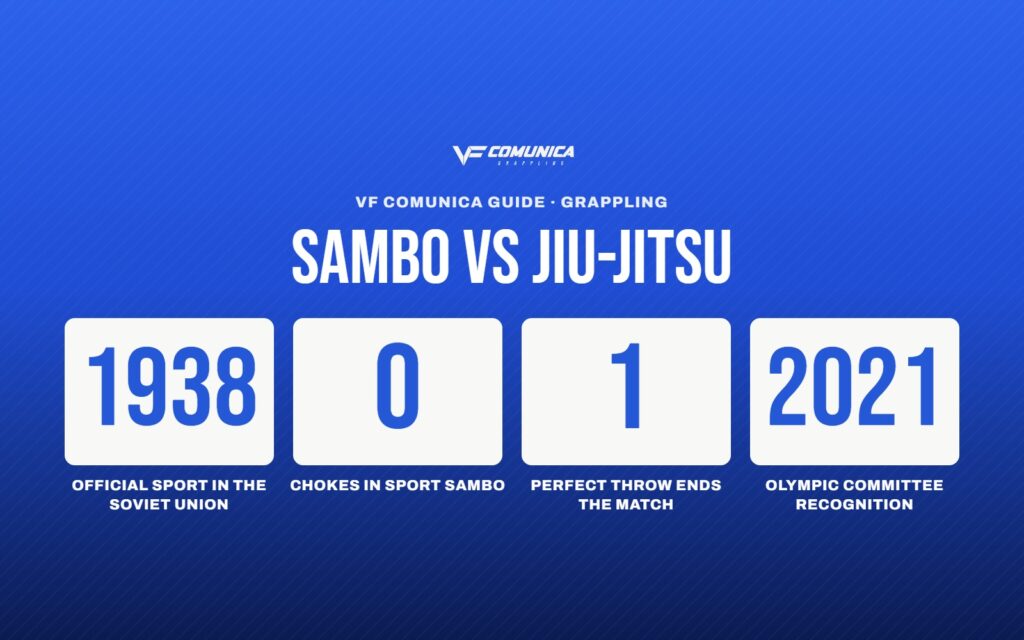
Sambo is a combat sport created in the Soviet Union that mixes throws, hold-downs and arm and leg locks. Most fans know it through the Russian fighters of MMA, such as Fedor Emelianenko, Khabib Nurmagomedov and Islam Makhachev, all world champions in the sport before they made their names in MMA.
The two sports look alike at first glance, but sambo and Jiu-Jitsu have different rules, uniforms and goals. Here is where sambo comes from, how a match works and what changes compared with Jiu-Jitsu.
What sambo means
The word is an acronym of a Russian expression that means “self-defense without weapons.” It started to be developed in the 1920s to train the Red Army, from the work of two men who operated separately: Vasili Oshchepkov, who had studied judo in Japan under Jigoro Kano, and Viktor Spiridonov. A student of Oshchepkov, Anatoly Kharlampiev, is credited with turning the system into a sport.
On November 16, 1938, the Soviet sports committee recognized sambo as an official sport. The international federation treats that date as the sport’s birthday.

The types of sambo
- Sport sambo: jacket wrestling with throws, hold-downs and arm and leg locks. No strikes and no chokes.
- Combat sambo: adds punches, kicks, knees, elbows and chokes, with protective gear. This is the version the MMA champions came from.
- Beach sambo: contested on sand, with a world championship since 2021.
How a sport sambo match works
Athletes wear a red or blue jacket held by a belt, shorts and soft-soled shoes. A match can end early in three ways: with a perfect throw, in which the opponent lands on his back and the thrower stays on his feet, with a submission, or with a big lead on points.
Throws score more or fewer points depending on how the opponent lands, and hold-downs also score. Submissions can only be applied on the ground and are limited to arm and leg locks. The rules ban chokes, attacks on the neck and locks that twist the heel, and they limit the time spent on the ground.
Sambo vs Jiu-Jitsu: the differences
| Sport sambo | Jiu-Jitsu (IBJJF rules) | |
|---|---|---|
| Uniform | Jacket, shorts and shoes | Gi with pants, barefoot |
| Chokes | Illegal | Legal |
| Leg locks | Legal, except those that twist the heel | Opened up gradually, by belt |
| Throws | A perfect throw ends the match | Worth two points |
| Ground fighting | Limited time | No time limit |
| Ranks | Sport titles | Belts, from white to black |
In practice, sambo rewards the athlete who throws and attacks fast, and Jiu-Jitsu gives the athlete time to work on the ground, including from the bottom, in the guard. The Jiu-Jitsu rules are explained in the VF Comunica guides to scoring and illegal moves.
Is sambo an Olympic sport?
No. The International Sambo Federation, founded in 1984 and based in Lausanne, Switzerland, received provisional recognition from the International Olympic Committee in 2018 and full recognition in July 2021. Recognition does not put the sport on the Olympic program. The first Sambo World Championship was held in 1973 in Tehran.
The most famous sambo fighters
- Fedor Emelianenko: four-time combat sambo world champion.
- Khabib Nurmagomedov: combat sambo world champion in 2009 and 2010; retired from MMA undefeated, with 29 wins.
- Islam Makhachev: combat sambo world champion in 2016 and a UFC champion in two divisions.
Makhachev is the one who needles Jiu-Jitsu practitioners the most. He has said more than once, including in a 2026 reply to Gordon Ryan, that he considers sambo stronger than Jiu-Jitsu.
The link to Brazilian Jiu-Jitsu
Sambo is also part of Jiu-Jitsu history. Rolls Gracie, who looked to other styles for techniques to add to his own game, was Pan American sambo champion in 1979, and Carlos Gracie Jr., founder of the IBJJF, won the same tournament in 1980.
Sambo or Jiu-Jitsu: which works better in MMA? Leave your opinion in the comments.