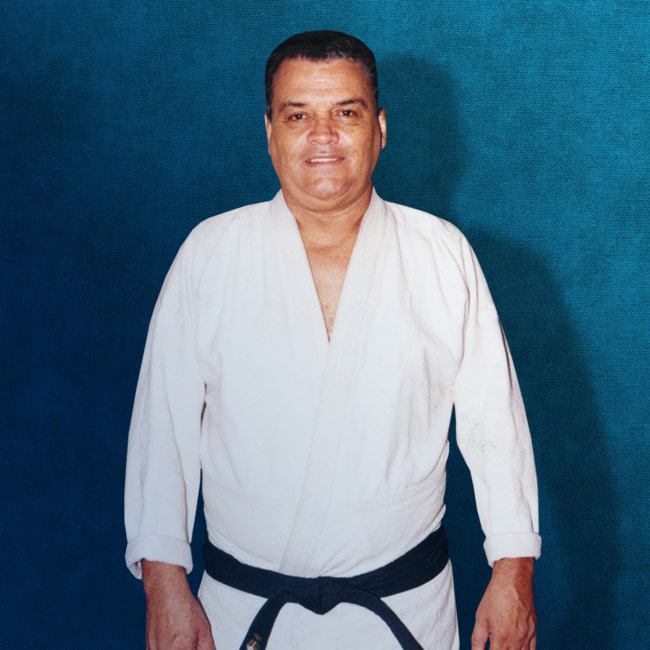




How fighter pay works at a superfight event: floor, ceiling and belt, by Fepa Lopes
The president of BJJ Stars tells VF Comunica the logic he uses to pay fighters, and why he stopped booking matches “on emotion”


How much a Jiu-Jitsu fighter makes at a superfight event is one of the most common questions among fans and athletes, and one of the least answered in public. Fepa Lopes, president of BJJ Stars, Brazil’s biggest superfight event, didn’t share numbers in his interview with Vitor Freitas for VF Comunica, but he explained the logic he uses to build the payroll for a night of fights.
A floor for newcomers, a ceiling for the champion
The system has two ends. “I have an entry floor, and there is a ceiling for the purses,” Fepa said. “The ceiling is the belt holder, and the floor is when the guy doesn’t have a world title yet and is coming to the event for the first time.”
Between one end and the other, the fighter moves up as he builds his career. “He grows until he reaches the ceiling, which is the belt holder,” he explained. For the promoter, the scale helps predict the cost of each edition before any match is announced. “That’s the logic that lets me make the events successful. I know more or less what I’m going to put in.”
The belt comes with two defenses at a fixed purse
Whoever wins a title at the event falls under a different rule. “When a guy wins the BJJ Stars belt, he gets money on the day he wins the belt, and he has two defenses to make for a fixed purse,” he said.

The amount doesn’t change with the name. Fepa recalled a champion who asked for more to defend the title and was told there was nothing to negotiate. “It’s this amount for everybody who is a champion,” he said.
The mistake of booking “on emotion”
The rule came out of losses. Fepa has promoted matches since 2002, when he created Desafio Black Belt, and admits he used to decide differently. “I went on emotion. Sometimes you say, ‘Wow, everybody wants to see this match, I’m doing it.’ You took a step you couldn’t afford, just to have the match,” he said. “Maybe it’s even ego. And at the end of the day, you got burned.”
Today the math weighs more. “Today you can’t play around. My family’s livelihood depends 100% on BJJ Stars,” he said. He used to own an academy and no longer does.
When a fighter is worth more
The scale doesn’t rule out negotiation when a name can change the size of the night. Fepa mentioned the case of Celso Vinícius, who was called out by Piter Frank on the microphone and said he would fight if he was paid what he wanted. The two sides talked and the match happened.
He also acknowledges that facing certain opponents costs more. Fighting someone who draws a crowd pays better for both sides, which is why everybody wants that opponent. The reasoning applies to Conor McGregor in MMA and, in Jiu-Jitsu, to Mica Galvão, according to the promoter.
The competition doesn’t scare him
With the UFC and events in Abu Dhabi paying Jiu-Jitsu fighters, Fepa often hears the question about the risk of losing ground. His answer is a line from someone who has been in the market for more than two decades. “A rising tide lifts all boats. I’ve been in this for a long time, so it’s only fair that I also reap the rewards,” he said.
The public numbers at BJJ Stars are the Grand Prix prizes. Erich Munis took home R$ 200,000 in 2023, and Mica Galvão R$ 100,000 in 2025.
Full video on YouTube
The full interview with Fepa Lopes is on the VF Comunica YouTube channel (in Portuguese).
Should Jiu-Jitsu events disclose how much they pay fighters? Leave your opinion in the comments.