




Olympic judo medalist wins BJJ blue belt gold, sparks debate
Hisayoshi Harasawa, who lost the Rio 2016 final to Teddy Riner, won the blue belt ultra-heavy division in Dallas and sparked a sandbagging debate
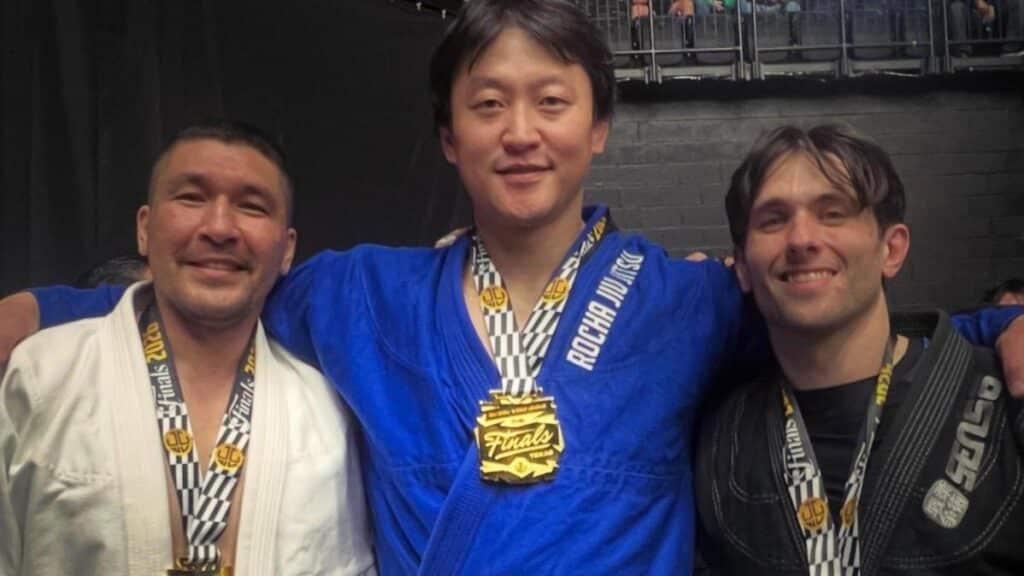

Hisayoshi Harasawa, the judo silver medalist at the Rio 2016 Olympics, won the blue belt ultra-heavyweight division at a Jiu-Jitsu World League tournament in Dallas, Texas. The 34-year-old Japanese judoka shared the result on Instagram on November 18 and posted his matches on his YouTube channel. His entry sparked a debate: should an Olympic-level grappler compete at blue belt against recreational athletes?
“I competed in the Jiu-Jitsu World League in Dallas and won gold in the Blue Belt Ultra Heavy division,” Harasawa wrote, posing with his medal next to teammates from Eastside Dojo, where he teaches.
Who is Harasawa
Harasawa is one of the top heavyweights in recent Japanese judo history. At Rio 2016, he reached the Olympic final and lost to France’s Teddy Riner. He also won silver at the 2019 World Judo Championships and bronze in 2018. At the Tokyo Games, he finished fifth individually after losing the bronze medal match to Riner again, and won silver with Japan in the mixed team event.
In jiu-jitsu, his official rank is blue belt, and that is the division he entered in Dallas.

The debate in the comments
The video split viewers. Some argued an Olympic medalist should not be entering blue belt brackets, where most competitors train a few nights a week after work. Others defended Harasawa, noting that his opponents pulled guard and that he used jiu-jitsu guard passing and submissions, not just judo.
The most common accusation is sandbagging, when an athlete competes below their real level to gain an edge. In Harasawa’s case, there is no sign that he avoided a promotion or misrepresented his rank. The real question is whether years of elite judo should push an athlete into a higher division, even with a blue belt around his waist.
Who decides the belt
In jiu-jitsu, belts are awarded by the instructor, and athletes register for tournaments at the rank they hold. High-level judokas who switch to jiu-jitsu often move up quickly because of their takedowns, grips and top control, but promotions still depend on mat time and the instructor’s evaluation.
What do you think: is it fair for an Olympic judo medalist to compete at blue belt?