



Fepa Lopes: “BJJ Stars doesn’t give opportunities. You, the athletes, create them”
The president of Brazil’s biggest superfight event tells VF Comunica what counts when he builds a card, and why not every champion fits the main stage

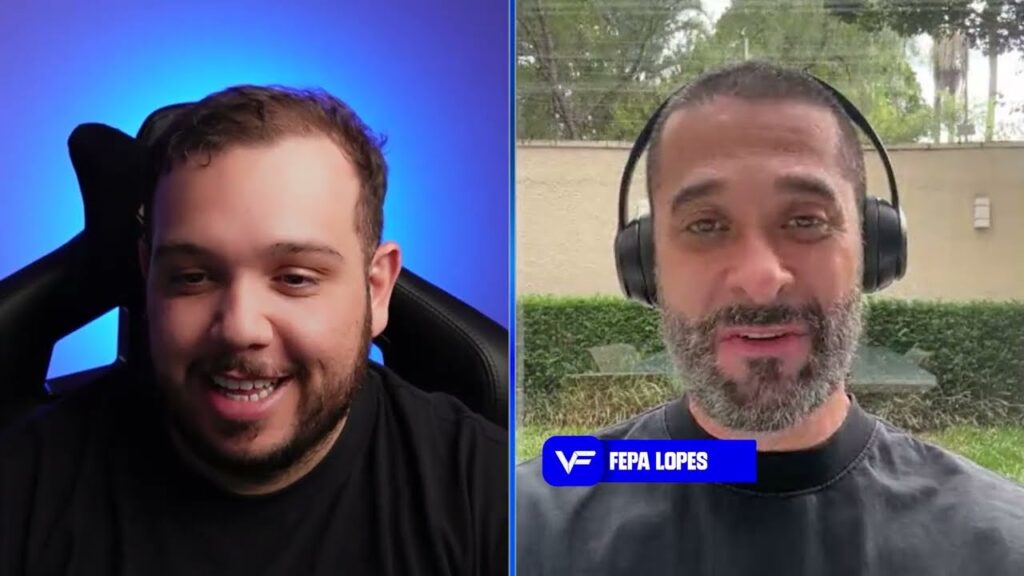
Every promoter of superfight events gets the same message dozens of times: “I just need one opportunity.” Fepa Lopes, president of BJJ Stars, Brazil’s biggest superfight event, has a ready answer for it. He shared it in an interview with Vitor Freitas for VF Comunica.
“My answer is always the same. BJJ Stars doesn’t give opportunities. You, the athletes, are the ones who create the opportunity. We give the recognition,” he said.
Fepa has been promoting matches since 2002, when he created Desafio Black Belt, and says he learned not to bet on promise. “I can’t show up today, after doing this for 25 years of my life, and say, ‘I’m going to give this guy an opportunity because he’s good at his gym, he smashes everybody there, but he has never competed,’” he said.
The king of the gym and the single stage
The most extreme example he gives is an athlete with no competition record who asked to face Bruno Malfacine, a ten-time world champion, arguing that he was the same weight and beat everybody in training.

The problem, according to Fepa, goes beyond the résumé. At a regular tournament, several mats run at the same time and the crowd is split. At a superfight event, the whole arena looks at one mat, and before that there is a press conference and a full week of promotion. “Some people feel it,” he said. “Some guys say, ‘Man, I froze.’ And experienced guys.”
That is why he avoids taking chances. “I can’t keep handing out opportunities, because at the end of the day I’m the one crying in bed,” he said.
Titles first, but not only titles
Fepa’s number one criterion is still results. “First the guy has to be the top dog, the champion,” he said. After that, two other filters come in.
The first is fighting style. “There’s the guy who is a champion but plays with the rulebook under his arm. That guy doesn’t fit the event,” he said. The logic is the fan who paid for a ticket and leaves upset when a match is decided by a single advantage.
The second is how much the athlete helps fill the arena and sell the broadcast. It is the same math a sponsor does. “Is a brand going to sponsor you because you’re a good-looking guy? No. It’s going to sponsor you because, besides being a good athlete, you can sell their product at the end of the day. That’s the difference,” he explained.
The switch the old guard needs to flip
Fepa counts himself among those who were slow to keep up with social media, but says there is no going back. He said he saw a veteran from his first events complain about people who care about posting on social media. For the promoter, that doesn’t add up. “He can’t show up and say, ‘I want prize money,’ if he has the attitude of the Jiu-Jitsu from when it paid in medals. That switch needs to be flipped,” he said.
The Piter Frank case
The best example of someone who understood the logic, in Fepa’s view, is Piter Frank. Before facing Caio Almeida, he built a story around the match, with videos of him skateboarding to practice and calling his opponent. Caio played along. “It turned into something really cool, with no disrespect,” the BJJ Stars president said.
Piter won, grabbed the microphone and called out Celso Vinícius, and his next match came out of that. “That guy completely understood the game,” Fepa said. Even when he lost, he recalls, Piter took home the fight of the night bonus and got invited back.
Full video on YouTube
The full interview with Fepa Lopes is on the VF Comunica YouTube channel (in Portuguese).
Is a title enough for an athlete to deserve a spot at a big event? Leave your opinion in the comments.