



Why don’t the big Jiu-Jitsu matches happen? Fepa Lopes answers: “People don’t want to face each other”
The president of BJJ Stars tells VF Comunica that money is almost never the reason, and explains how exclusive contracts make it hard to know who is number one

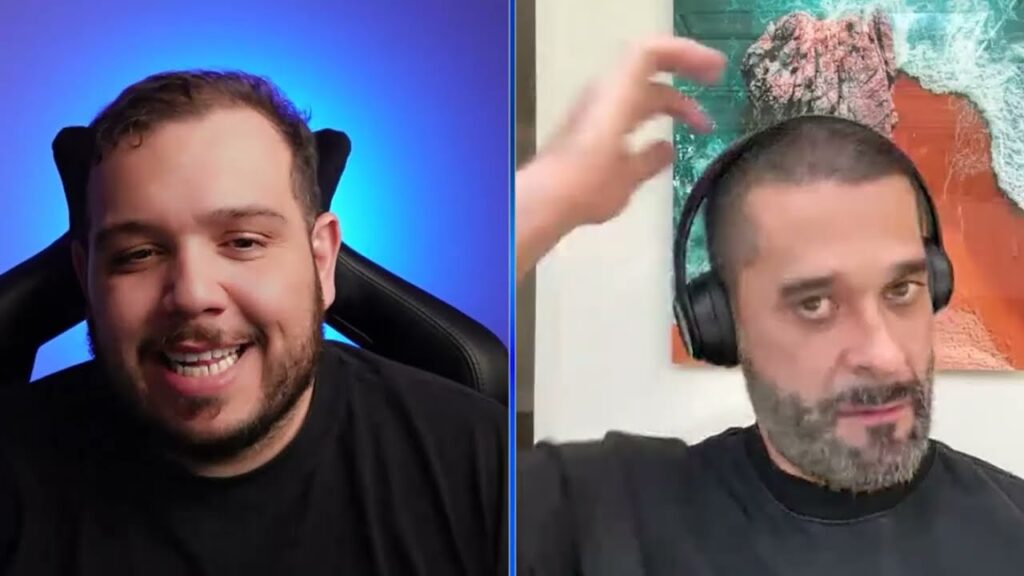
Every Jiu-Jitsu fan has a list of matches they would like to see and that never get announced. The most repeated explanation is lack of money. Fepa Lopes, president of BJJ Stars and a superfight promoter since 2002, says the reason is usually something else. Vitor Freitas asked him, for VF Comunica, what the biggest difficulty is today in booking a big match.
“That’s something that actually surprises me. People don’t want to face each other,” he answered. “Few athletes say, ‘I’ll fight anybody.’”
The talk that never gets to the money
Fepa describes how the refusal usually shows up. It comes before any financial offer, at the first contact, in the form of a full schedule. A seminar already booked, a request to look at another date. “You start to understand they don’t want it,” he said.
That is why he rejects the money theory. “I can’t say it’s money, because many times we don’t even get to that part,” he said. When a negotiation gets to the number and doesn’t close, he says, the reason is clear and acceptable. “That was never the problem. I can guarantee you that.”

The promoter made a point of saying he was generalizing and that many athletes accept any challenge. The problem, according to him, is concentrated exactly in the most requested matches. “Those matches everybody wants to see become hard to make because one side isn’t interested,” he said.
The example on the other side
To show there is another way to think about a career, Fepa mentioned Mica Galvão. “The guy walks in to fight and puts on a show. Win or lose, he puts on a show,” he said.
What impresses him most is how Mica decides whether to accept an opponent. “Every time I try to bring him to fight at BJJ Stars, it’s the complete opposite of what I hear from a lot of people. If it isn’t someone really tough, he doesn’t want it,” he said. “It has to be a guy who is really on the rise. He can be from a different weight class, he can be a guy with a title Mica doesn’t have. Those things motivate him to fight.”
Exclusivity and each house’s champion
The second obstacle is contracts. With different organizations signing exclusive deals, athletes of the same weight end up competing in circuits that don’t cross. “Matches everybody wants to see won’t be easy to see, unless one of the organizations manages to bring the other guy in,” Fepa said.
He says most of the fighters he talks to prefer not to be tied to a single event, and gives a reason that goes beyond the purse. For a Brazilian athlete, competing in Brazil keeps the connection with the public that buys his products. “Big Brazilian idols who live in the United States today have less connection with the Brazilian public than those who live here,” he said.
The effect on the sport is a split picture. “It ends up fragmented,” he said. Vitor Freitas added that it becomes hard to know who is really number one in the world at each weight, and Fepa agreed. In his view, the solution would be to bring the champions of each organization together in one tournament. “The ideal would be to see a Grand Prix with them, to really know who is number one.”
The generation that doesn’t ask permission
The gap left by those who turn down matches can be filled by the younger ones. Fepa said he follows blue and purple belts who already beat black belts in no-gi and arrive with their own audience. “These kids are coming without asking permission, they’re kicking the door in,” he said.
Full video on YouTube
The full interview with Fepa Lopes is on the VF Comunica YouTube channel (in Portuguese).
What is the match you most want to see that has never happened? Leave your opinion in the comments.