



How Carlson Gracie built champions: the “red rooster” and the open door for those who couldn’t pay
Marcelo Alonso, who owns one of the largest archives on the master, tells VF Comunica how Carlson picked his fighters and why he banned early celebrations

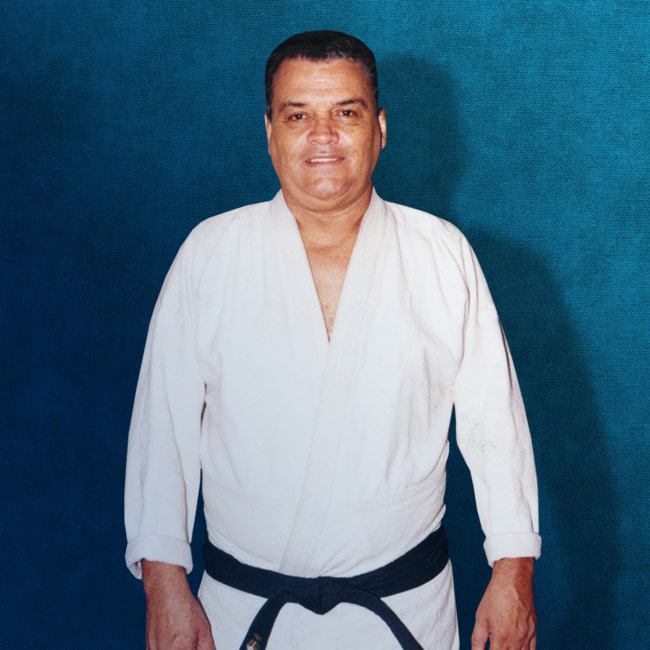
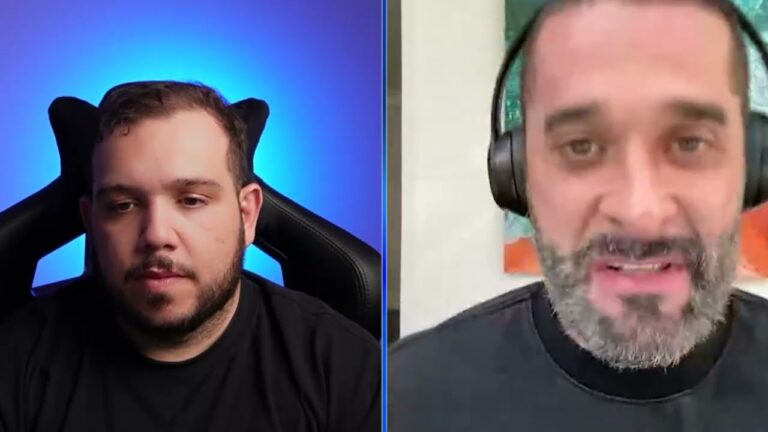
Carlson Gracie was the greatest fighter of his generation and, after he retired, he built the team that dominated Jiu-Jitsu competition in Rio de Janeiro and carried that strength into vale tudo, the no-holds-barred fights that came before MMA. Few people followed that work as closely as journalist and photographer Marcelo Alonso, who says he has the largest archive on the master. In an interview with Vitor Freitas for VF Comunica, he explained how Carlson picked and shaped his students.
Paying students had no priority
The first difference, according to Alonso, showed up when Carlson left the family academy and opened his own school in Copacabana. There, the monthly fee stopped deciding who got attention. “What Carlson cared about was whether you had the potential to be a champion,” he said.
The journalist recreates the master’s reasoning in front of two students. One paid on time and had no future in competition. The other paid nothing. “That one has fire in his eyes, huh? Red rooster,” Carlson would say, as Alonso remembers it. “He would give more attention to the guy from the favela, who didn’t pay, than to the guy who paid.”
The example he gives is Albertinho dos Santos, the son of the man who took care of Carlson’s roosters. The master asked his employee to bring the boy in to train. “He made the guy a Jiu-Jitsu champion. Today he makes a very good living from Jiu-Jitsu in Europe,” Alonso said.

Red rooster, spotted rooster, white rooster
The expression came from cockfighting and became Carlson’s way of evaluating people. The red rooster was the fighter born ready for war. “Red roosters were few,” Alonso said, naming Carlão Barreto, Ricardo Arona and Murilo Bustamante as examples.
There was also the spotted rooster, the talent who didn’t have the same grit from the start but could be worked on. “If the guy was a talent, he could still turn him into a champion, armor-plate his mind,” he explained. With the white rooster, there was nothing to be done. “As Carlson used to say, you can’t armor-plate the mind of a white rooster.”
“You’re going to celebrate early?”
To show what that mental armor was, Alonso goes back to a scene from 1997, at UFC 12, when Vitor Belfort won his first match in the heavyweight tournament. On the way back to the locker room, someone on the team shouted that the title was already theirs. Carlson turned around furious. “You’re going to celebrate early?” he snapped. Belfort went back out and won the final.
According to the journalist, the students knew they would get yelled at if they celebrated early. The master’s question was always the same: why, did you think you weren’t going to win? “That defines Carlson,” Alonso said.
He gives two other proofs of the same mindset. Carlão Barreto won three fights in one night with a broken rib, the last one against Kevin Randleman. And Murilo Bustamante faced Tom Erikson, who weighed about 285 pounds, in a fight that was supposed to have a time limit and, in the middle of it, no longer did.
Fighter and coach
What makes Carlson rare, in Alonso’s view, is that he was great in both roles. In soccer and volleyball, he points out, the best coaches were almost never the best players. “He manages to build people, to have the eye for it, which isn’t easy, and to pass the champion’s mindset on to the people he sees potential in,” he said.
Full video on YouTube
The full interview with Marcelo Alonso is on the VF Comunica YouTube channel (in Portuguese).
Who was the greatest builder of champions in the history of Jiu-Jitsu? Leave your opinion in the comments.