



Clips, uncredited photos and artificial intelligence: what changed in fight media, by Marcelo Alonso
A photographer and former Tatame editor who left biology to cover Jiu-Jitsu in the 1990s compares, for VF Comunica, the magazine era with the era of faceless channels

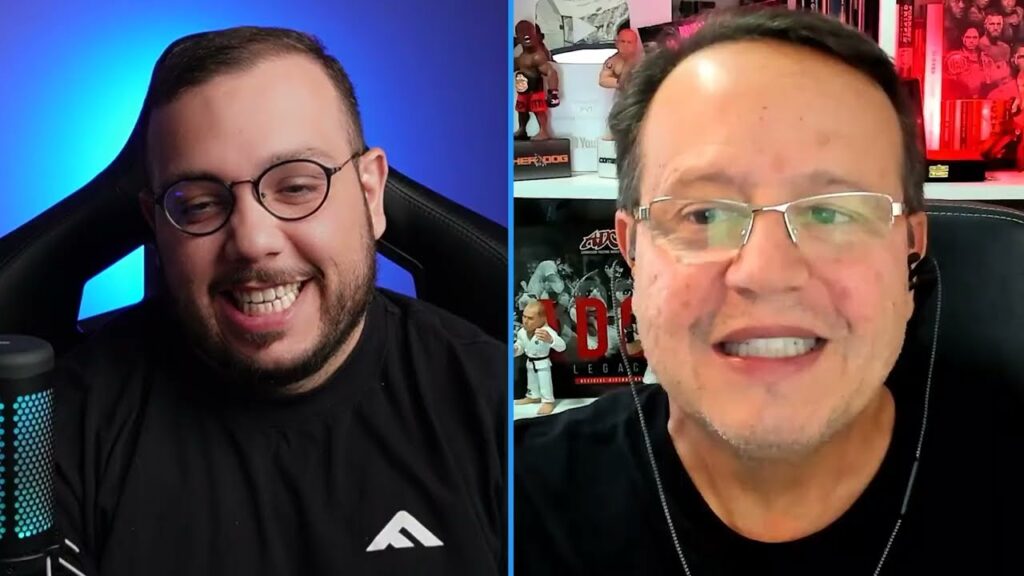
Marcelo Alonso was a biologist. He tested pharmacy products in a lab in Rio de Janeiro and photographed Jiu-Jitsu tournaments on weekends. In 1993, a martial arts magazine asked him for photos and a text about the match between Renzo Gracie and Wallid Ismail. Three months later, Royce Gracie won the first UFC, demand for Jiu-Jitsu content exploded and he changed careers. “I found my real passion and calling, which is journalism,” he told Vitor Freitas for VF Comunica.
More than three decades later, the photographer, a former editor of Tatame who now runs the fight site PVT, compares the craft he learned with what is practiced now. The conversation opened with a line from Vitor Freitas that frames the rest: “No sport gets big without documented history.”
The father, the degree and the studio
The career change came with a condition. His father, who had paid for his biology degree, supported the decision and warned him the journalism degree would be on him. “I only ask one thing: you’re going to leave your profession, you’re going to study journalism, but now you’re paying,” Alonso recalled. He paid, by trading ad space in the magazine.
Then he rented an apartment in Copacabana and set up a studio just to photograph fighters, something that didn’t exist. The bet came from a reading of the market. “I realized we were the best at that and the world wanted it. So I said: man, I’m going to be a fight agency,” he said.

“Clips are magazine covers”
Alonso doesn’t demonize the internet. For him, today’s logic is the same as when he spent the whole month thinking about the cover. “The mainspring of journalism is the scoop, the good headline,” he said. “Clips are nothing more than magazine covers that show up on your YouTube every day.”
The difference lies in who picks the headline. “The guy does have the obligation to choose a good headline and, obviously, to use good judgment,” he said. He estimates that the great majority of fight channels do serious work, and saves his criticism for those that post excerpts without context and without a name on them.
Vitor Freitas agreed and pointed to the criterion he uses to tell them apart: a face. He answers for VF Comunica, Alonso answers for PVT, and whoever posts without identifying himself answers for nothing. “Everybody needs to be held responsible for what they say,” he said.
Photo credit: from lawsuits to “it’s on the internet”
The second subject is the one that affects a photographer the most. In the magazine era, publishing an image without permission or credit was expensive. “It was a lawsuit, and a fast one,” recalled Alonso, who saw his own newsroom pay for a mistake like that.
Today he asks for little. When he finds one of his photos posted without identification, he sends a message asking only for a tag. It doesn’t always work. Alonso said he broke a story in an interview with a UFC fighter and, shortly after, saw the information on another channel with no mention of where it came from. He wrote to the person in charge. “Does it hurt to give credit? It costs nothing,” he argued. The answer he got was that the content was on the internet.
The photo AI changed
The newest problem is artificial intelligence. During the interview, Alonso showed a version of a classic photo of his, of the BTT team, “updated” by software that changed fighters’ faces. “A classic photo of mine that AI distorted, it became another image. It’s not mine anymore, it’s not the photographer’s anymore,” he said.
He makes a point of not blaming whoever posted it and says he sees more benefits than risks in the technology. The warning is about what is lost when a historical record starts circulating altered.
Rivals who pushed each other
Alonso closed the subject with a memory of the competition in the 1990s. Tatame and the rival magazine competed over covers, equipment and photographers, and he says that fight is what raised the level of both. “One kept pushing the other,” he said. When he runs into his old competitor, the greeting is a hug.
Full video on YouTube
The full interview with Marcelo Alonso is on the VF Comunica YouTube channel (in Portuguese).
Do you check where a clip comes from before sharing it? Leave your opinion in the comments.